How to Commission a Custom Artwork: A Step-by-Step Guide
Commissioning feels intimidating until you've done it once. Here's what the process actually looks like — from that first message to hanging something on your wall.

People assume commissioning a painting is complicated — that it requires knowing the right vocabulary, having a clear vision locked down before you reach out, or spending more than you want to. None of that is true. The best commissions I've worked on started with something much simpler: a client who knew roughly what feeling they wanted and trusted me to find the right visual form for it.
This guide walks through how commissions work at Michael Wada Studio, step by step. It's also useful as a general reference if you're considering working with any artist for the first time.
Step 1: Start with a feeling, not a description
The most common mistake people make when initiating a commission is trying to describe exactly what they want before they've had a conversation. You'll write a long, careful email explaining every detail — the colors, the composition, the mood — and end up with a painting that technically matches your description but doesn't feel alive.
Better to start with a feeling. What do you want to experience when you stand in front of this piece? Calm and contained, or expansive and slightly unnerving? Something that holds its own against a busy room, or something that disappears into the wall until you look directly at it? These aren't abstract questions — they're the most useful information an artist can have.
Bring reference images if you have them. They don't have to be art. A photograph, a fabric swatch, a screenshot of a color palette from a website — any of it helps. The goal isn't to replicate what you're showing; it's to understand your visual instincts.
Step 2: The initial conversation
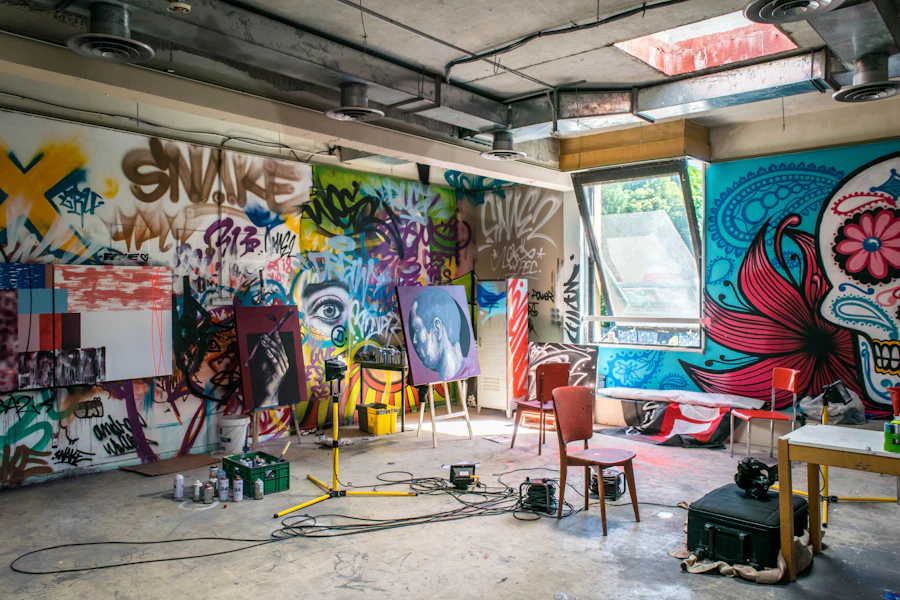
Once you reach out, we schedule a call or an in-person visit to the studio. These conversations are deliberately unstructured. I want to hear about the space, who lives or works there, what other objects share the room with the piece, and what the work needs to do over time.
I'll ask questions that might seem unrelated to art. How do you use the room? What time of day do you spend most time there? What existing pieces do you already love? These details shape decisions — about scale, palette, surface texture — in ways that are hard to explain in isolation but obvious once you see the finished work.
By the end of that first conversation, I usually have a clear enough read on the project to draft a proposal. If I don't, that's useful information too: it usually means we need one more conversation before moving forward.
Step 3: Proposal and agreement
The proposal outlines scale, medium, timeline, and price. It describes the direction I'm planning to pursue and why, based on what we discussed. It's not a contract in a legalistic sense — it's a shared understanding of what we're making together.
Pricing depends on scale, complexity, and timeline. A 16x20 inch oil painting on panel and a 60x84 inch canvas with multiple layers of mixed media are fundamentally different undertakings, and the pricing reflects that. I don't have a per-square-inch formula; it's a judgment call based on the work involved. I'll always be transparent about how I arrived at a number.
A deposit — typically 50% — confirms the commission and reserves time in my production schedule. The balance is due on completion, before delivery.
Step 4: Studio time
This is where I go quiet for a while, which some clients find unnerving if they're not expecting it. Studio time is the actual work: building surfaces, laying in initial passes, letting paint dry, revisiting, adjusting. I don't narrate the process in real time because doing so breaks concentration and tends to produce self-conscious work.
What I do offer at the midpoint of most commissions is a progress photograph. Not to ask for approval — the direction was set in the proposal — but to keep you in the loop and catch any significant misalignments before they harden. Most of the time the response is some variation of "yes, keep going." Occasionally it opens a useful conversation about a specific element.
The timeline depends on where the commission falls in my production schedule. Most pieces take four to ten weeks from deposit to completion. If you have a specific deadline — a move, a gift, a project completion date — tell me up front. I can often accommodate it, but only if I know about it in advance.
Step 5: Completion and delivery
When the piece is finished, I photograph it under natural light and send you a final image before it leaves the studio. This is the moment for honest feedback. If something genuinely isn't working, we talk about it. In eight years of doing this, a final revision has been necessary maybe twice — but the offer is real.
Delivery for local clients (Los Angeles area) is typically handled in person, which I prefer. Getting to see a work installed in its space, with its actual light and surroundings, is useful. For clients elsewhere, I ship via professional art shippers with full insurance and detailed crating. I can provide guidance on installation if needed.
A note on what I take on
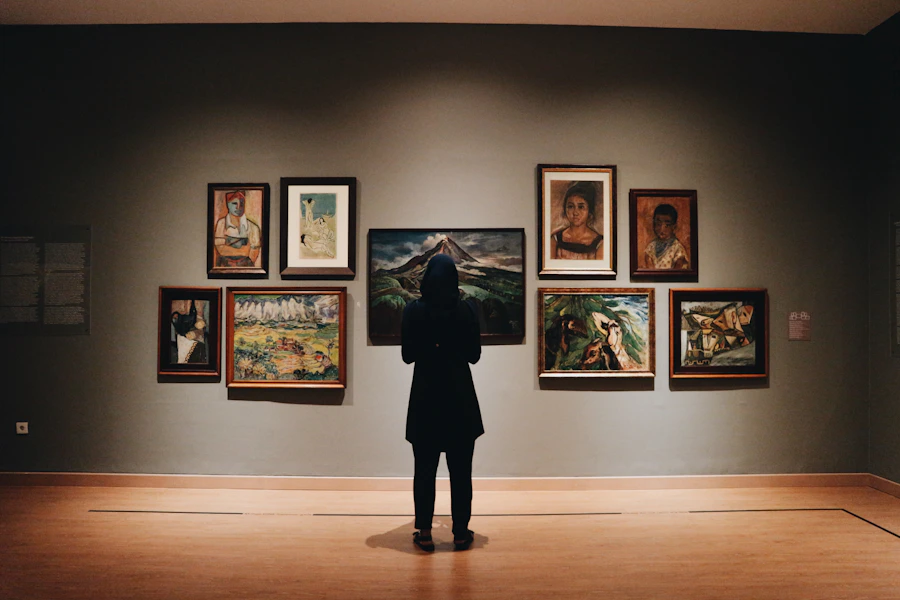
I don't take every commission that comes my way, and I'm upfront about that. Some projects aren't the right fit — either because the brief is too prescriptive for the kind of painting I make, or because the timeline doesn't work, or because the scale of the project doesn't leave room for meaningful creative input. None of that is personal. It's about doing good work, which requires the right conditions.
What I'm drawn to are commissions where there's genuine latitude — where the client trusts the process enough to let the painting become something they couldn't have imagined exactly, only felt. Those are the pieces I'm proudest of, and invariably the ones clients hold onto longest.
If you have something in mind, send me a message. No brief required. Just tell me what you're thinking about and we'll go from there. You can also read more about how the studio works or browse recent projects for a sense of the range.