Choosing Original Art for Your Home or Office
Art selection is less mysterious than people make it out to be. Here's how to approach it practically — and how to trust your own eye.
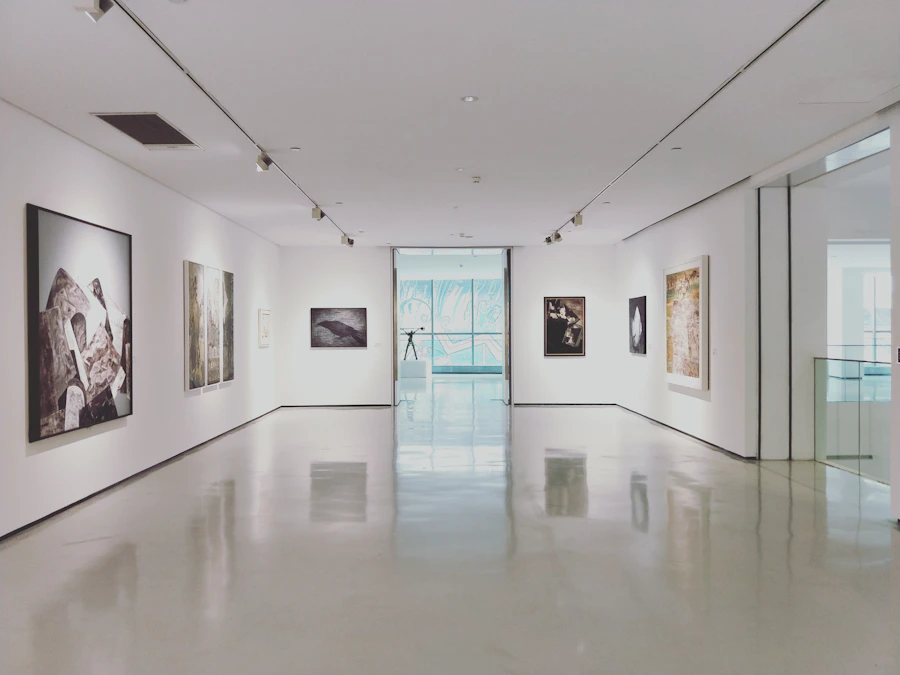
Most people who want original art on their walls talk themselves out of it. They assume it requires expertise they don't have, a budget they can't justify, or a coherent aesthetic vision they've never articulated. In my experience, none of that is actually necessary. What it requires is slowing down, paying attention to your own reactions, and making a few practical decisions without overthinking them.
This is the advice I give clients who come to the studio unsure of what they're looking for. It applies equally to buying for a home or an office.
Scale before anything else
The single most common error I see is buying art that's too small for the space. A 12x16 inch painting on a large living room wall reads as a postage stamp. The surrounding empty space doesn't create drama — it just makes the work look lost and undersized.
A useful rule: the work should occupy roughly two-thirds of the wall width it hangs on, at minimum. If you're placing art above furniture — a sofa, a credenza, a bed — the piece should be close to the width of that furniture. This isn't an absolute law, but it's a reliable starting point for any room.
Before buying anything, tape out the approximate dimensions on your wall using painter's tape. Live with those proportions for a day. The right scale will feel immediate and a little bold. If it feels safe and easy, you've probably gone too small.
Light: the factor most people forget
Original paintings change character dramatically depending on light. An oil painting with heavy impasto will catch raking light and cast tiny shadows that don't exist under flat ceiling fixtures. A dark-palette work that looks moody and rich in a gallery can flatten entirely under cool LED downlights at home.
Before committing to a placement, hold the piece (or a print-out of it) against the wall at different times of day. Natural morning light, afternoon sun, evening artificial light — they're three different viewing experiences. If you're buying for a room with specific lighting conditions, tell the artist. It can inform decisions about surface finish, varnish, and even palette.
For offices with fluorescent or very cool overhead lighting, I tend to recommend works with warmer palettes or high contrast — pieces that hold their presence even in flat, institutional light. For homes with lots of natural light, the range of what works expands considerably.
Buying original vs. buying prints
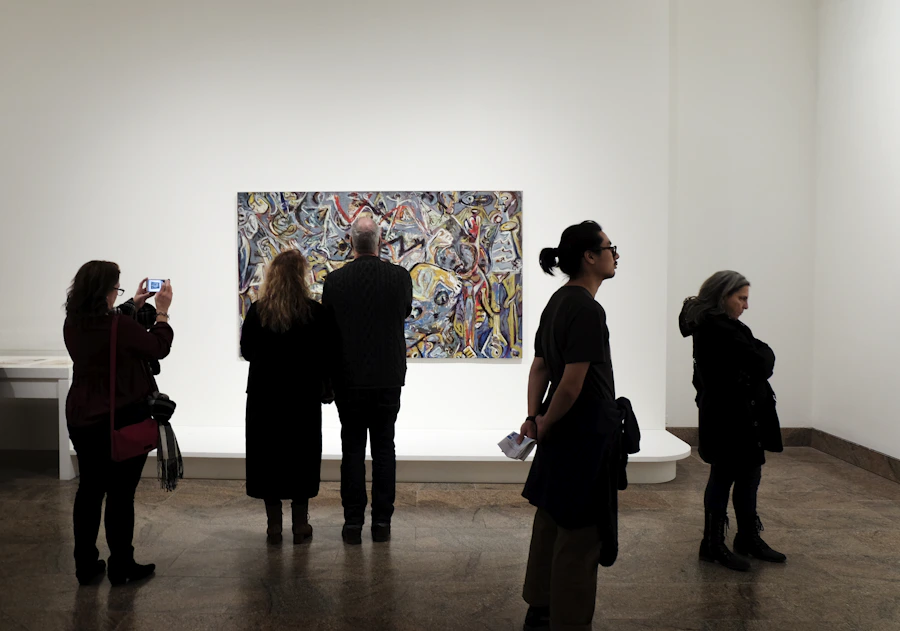
Both are legitimate choices, and the decision doesn't have to be about budget alone. Original works carry something prints don't — the physical evidence of making. You can see brushwork, hear the grain of the surface if you run a finger near the edge, notice the decisions the artist made and revised. There's a presence to an original that reproduces poorly in photographs, which is why so many people are surprised when they see a painting in person for the first time.
Prints — high-quality giclées from an artist you admire — are a fine way to live with work you respond to, especially when originals from that artist aren't available or aren't within reach. The key is buying from the artist directly, or from a gallery that represents them, rather than from mass-market art retailers where the same image is sold thousands of times on canvases that won't last a decade.
If original work is your goal but budget is a constraint, consider scale. A smaller original is still an original. Many artists, including those whose large-scale work commands high prices, also make intimate works on paper or small panels that are accessible entry points into their practice.
Responding to your own instincts
People are often suspicious of their own reactions to art. They've absorbed the idea that liking something immediately means it's too obvious, too commercial, or not serious enough. This instinct is usually wrong.
Your gut response in the first ten seconds of seeing a piece is real information. If you feel something — curiosity, discomfort, recognition, delight — pay attention to that. The work that holds you in those first moments is the work that will hold you ten years from now.
What changes over time is your relationship with work that has layers. A painting you find immediately beautiful but also slightly mysterious — something in the surface or the space that you can't quite explain — will reward extended attention. A painting that's immediately beautiful and fully readable tends to exhaust itself faster. When you're choosing for a space you'll occupy daily, depth matters.
Art in office environments
Corporate and professional spaces have specific requirements that residential collecting doesn't. The work needs to read across a room, hold up to regular scrutiny from people who may not be attuned to art, and communicate something about the organization without being too literal about it.
For offices, I generally steer clients away from figurative work unless it's abstract enough to be open to interpretation. A painting that everyone reads differently tends to generate better conversation and stay interesting longer than one with a single obvious meaning. Abstract work also ages well — it doesn't date itself the way illustrative or representational pieces sometimes do.
Scale is especially important in professional spaces. A reception area with a single large-scale painting makes a stronger statement than the same wall covered with a grid of smaller pieces. When in doubt, one significant work beats five forgettable ones.
Working with an artist directly
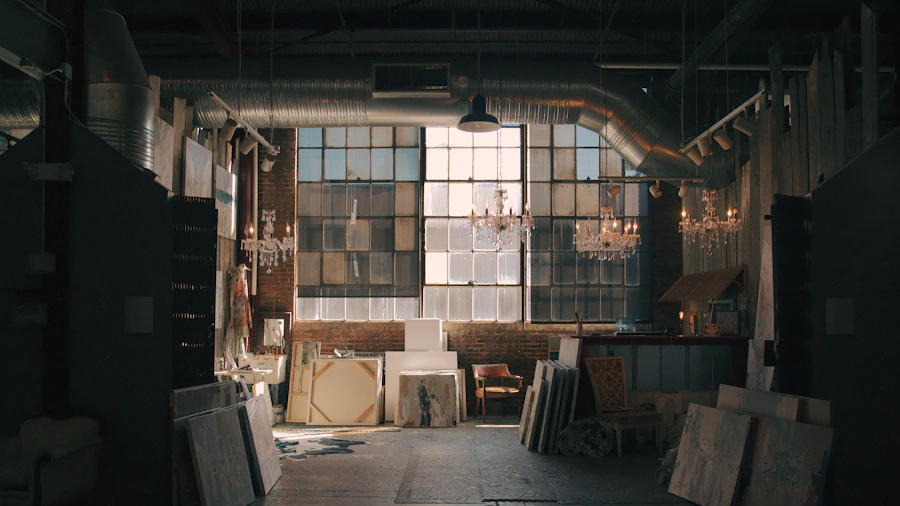
Buying directly from an artist — rather than through a secondary market or a retail gallery that takes a large cut — means more of what you spend goes toward the work itself. It also opens up the possibility of conversation: about the piece you're considering, about what else might be available, about commissioning something specific to your space.
Most artists are easier to approach than people expect. A short, genuine message — describing the space, what you're drawn to in the work, what you're hoping to find — is usually enough to start a productive conversation. You don't need to arrive with a finished brief or a locked budget. The range often has more flexibility than what's listed publicly.
If you've been circling the idea of original art for your space and aren't sure where to start, get in touch. We're happy to talk through what you're working with — room dimensions, existing palette, the feeling you're after — and point you in a direction that makes sense. You can also read about how we handle custom commissions or browse the studio portfolio to see what's available.